The Soundness Playbook: How to Prevent Bowed Tendons Horse Injuries
Every equestrian shares the exact same morning dread. You walk down the barn aisle, slide open your horse’s stall door, and run your hand down their lower leg, only to feel a distinct, hot, fluid-filled swelling contouring the back of the cannon bone. That signature banana-shaped bulge signifies a severe soft tissue injury. For performance horses across all disciplines, a tendon tear is one of the most physically devastating diagnoses an owner can face. It requires months of intensive stall rest, expensive biological therapies, and a grueling rehabilitation schedule.
The lower limb of an equine athlete is an incredible feat of natural engineering, but it is also highly vulnerable. Because there is absolutely no muscle tissue below the knee or hock to help absorb concussive shock waves, a complex network of dense collagen fibers bears the brunt of every explosive stride. Therefore, protecting an athletic horse requires moving past reactive care. To effectively prevent bowed tendons horse athletes rely on a proactive management framework that combines precise physical conditioning, advanced leg protection, and scientifically engineered arena infrastructure.

The Anatomy of Strain: Inside the Flexor Tendon Matrix
To build a reliable defense against soft tissue failure, you must first understand the structural limits of the equine lower leg. The area behind the cannon bone houses two primary structures: the superficial digital flexor tendon (SDFT) and the deep digital flexor tendon (DDFT). These dense bands of connective tissue act like massive, high-tension rubber bands, stretching and storing elastic energy every time the hoof impacts the ground.
A bowed tendon occurs when these internal collagen fibers are stretched past their physiological breaking point, causing microscopic tearing and localized bleeding within the tissue core. This structural failure typically happens when a horse encounters an unexpected environmental trigger. For instance, traveling at high speeds over a hidden mud hole, landing awkwardly off a massive fence, or slipping on an unmanaged surface can instantly overload the flexor apparatus.
Furthermore, many injuries are not caused by a single traumatic event. Instead, they are the result of chronic, repetitive micro-trauma. When a horse is worked continuously on poor footing while fatigued, the collagen strands suffer tiny, invisible tears. If the animal is not given adequate rest between intense training sessions, these micro-fissures fail to heal properly, slowly degrading the tendon core until a catastrophic tear occurs during a routine exercise path.
The Training Equation: Fatigue Management and Progressive Load
The absolute baseline of injury prevention begins with a structured, disciplined conditioning protocol. Far too many equine enthusiasts mistakenly believe that high-intensity speed work or complex technical patterns are the only ways to build an elite athlete. However, working a horse to the point of complete physical exhaustion is the single fastest way to compromise their leg health.
When a horse’s muscles become deeply fatigued, they lose their natural ability to stabilize the upper leg joints and absorb concussive energy waves. As a result, that massive mechanical workload is transferred directly down onto the passive tendon and ligament matrix of the lower limb. To prevent this dangerous overload, your weekly training schedule should focus on progressive loading.
Progressive loading involves slowly increasing the duration and intensity of exercise over several months, allowing the dense collagen matrix time to remodel and strengthen in response to physical stress. Incorporating extended periods of active walking over firm, even terrain is exceptionally beneficial for developing dense, resilient tissue bundles. Additionally, implementing structured warm-up and cool-down periods ensures that blood circulation is fully optimized before the horse is asked to execute high-impact athletic maneuvers.
Soundness Optimization: Tracking Structural Vulnerabilities
To help you audit your performance horse management program, this operational breakdown maps out the required environmental adjustments and structural baselines for optimal limb health.
| Management Pillar | Primary Risk Vector | Preventative Strategy | Infrastructure Dependency |
| Physical Conditioning | Muscle fatigue transferring extreme loads to the flexor matrix | Progressive loading; ample rest days; long walking sets on firm ground | Requires consistent, predictable training tracks to ensure uniform mechanical loading |
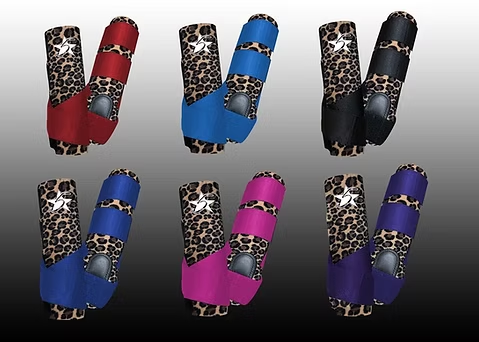
| Leg Protection | External interference strikes; overextension of the joint | High-quality, breathable sport boots or custom compression wraps | High risk of dangerous thermal heat buildup if non-porous materials are used in deep footing |
| Arena Footing | Shifty, deep sand causing severe hyperextension of the fetlock | Engineered surfaces with high shear strength and uniform depth | Absolute baseline; multi-layered sub-bases eliminate deep, uneven spots |

The Infrastructure Link: Why Superior Arena Footing Saves Limbs
Even the most meticulous conditioning program and the most expensive protective leg gear cannot fully protect an equine athlete if the underlying facility infrastructure is actively working against them. The quality of your riding surface plays a definitive, day-to-day role in determining the structural lifespan of your horse’s soft tissues.
Riding on poor, unmanaged footing, such as deep, uncompacted sand or uneven, rock-hard dirt, introduces massive, repetitive trauma to a horse’s limbs. Deep, shifty ground allows the hoof to slide too far back and sink excessively during the push-off phase of the stride. This excessive sinking pulls the fetlock joint down at an unnatural angle, putting immense, destructive strain on the suspensory apparatus and flexor tendons. Conversely, hard, unyielding surfaces reflect 100% of the landing shock right back up into the skeletal structure, accelerating joint wear and causing deep bone bruising.
True protection requires training on a custom-engineered, multi-layered riding surface. High-performance modern arenas utilize a highly stable, compacted sub-base layered beneath a specialized synthetic or fiber-sand matrix. This precise architecture delivers predictable shear strength and excellent impact absorption. It allows the hoof to enter and exit the ground cleanly without slipping, sliding, or sinking dangerously. By stabilizing the footbed, an engineered arena layout radically minimizes lower leg strain, providing a safe, high-velocity training space where your horse can perform confidently.
Designing an Elite Haven: The Blueprint for Advanced Barn Architecture
Safeguarding an exceptional performance horse demands a comprehensive, luxury design philosophy. This strategy extends well beyond the borders of the training track. It reaches deep into your stable layout. Performance horses thrive best when their complete living environment matches their natural needs. The blueprint must support their respiratory, skeletal, and behavioral requirements.
Outdated wooden barns present severe operational challenges for modern horsemen. Poorly ventilated stall structures introduce identical issues. Trapped dust from hay storage and heavy airborne ammonia from bedding materials severely irritate a horse’s respiratory tract. Stagnant humidity compounds the problem. This ongoing inflammation limits their oxygen intake capacity. It leads to premature fatigue during exercise and significantly elevates the risk of soft tissue injury. Furthermore, traditional wood construction creates a continuous structural fire risk that threatens your valuable livestock.
Investing in a premium, custom-engineered steel barn completely modernizes this management framework. Modern equestrian estates utilize fire-resistant, commercial-grade steel frames. They pair these frames with advanced, insulated clear-span roof panels. This innovative architecture provides exceptional natural climate control. It keeps stalls cool in the summer and completely dry in the winter. The bright, clear-span design eliminates dark, damp corners and minimizes dust reservoirs. This layout promotes pristine indoor air quality and supports peak athletic wellness. To review comprehensive professional guidelines on equine anatomy, lower leg health, and soft tissue injury management, you can consult public resources curated by the American Association of Equine Practitioners (AAEP). They track veterinary safety and performance horse medicine nationwide.

Build Your Ultimate Equestrian Legacy with Silver Trophy Equine
Do not let unmanaged arena surfaces or unpredictable footing threaten your animals. Outdated stable environments endanger the safety, comfort, and longevity of performance horses. The elite construction specialists at Silver Trophy Equine specialize in providing white-glove, turnkey design and construction solutions. We build premium custom riding arenas and fire-resistant luxury steel barns.
Our team is led by passionate, lifelong horsewomen. They truly understand the practical, daily realities of elite horse ownership. We guide you through a smooth, stress-free construction experience to build a gorgeous facility tailored around your specific goals.
Create an extraordinary, safe environment where your horses can truly thrive and remain sound for decades to come. Contact Silver Trophy Equine today to connect with an arena construction expert. Take the first decisive step toward bringing your dream equestrian property to life.